With these baking secrets you’ll never have to worry about serving an undercooked cake ever again!
Short on time? Your cake is done when the edges pull away from the tin, the top springs back when you press it, a skewer in the centre comes out clean, or a thermometer reads 93–99°C (200–210°F).

Jump to:
Is my cake done?
SCENARIO: You have your cake in the oven and the timer set according to the recipe. Then, the timer goes off and you get your cake out, but you are not sure if it is completely cooked all the way through. The recipe said to bake it for 40 minutes however you are not convinced this is long enough. Now you don’t know whether to put the cake back in the oven for another 10 minutes or whether to cross your fingers and hope for the best…
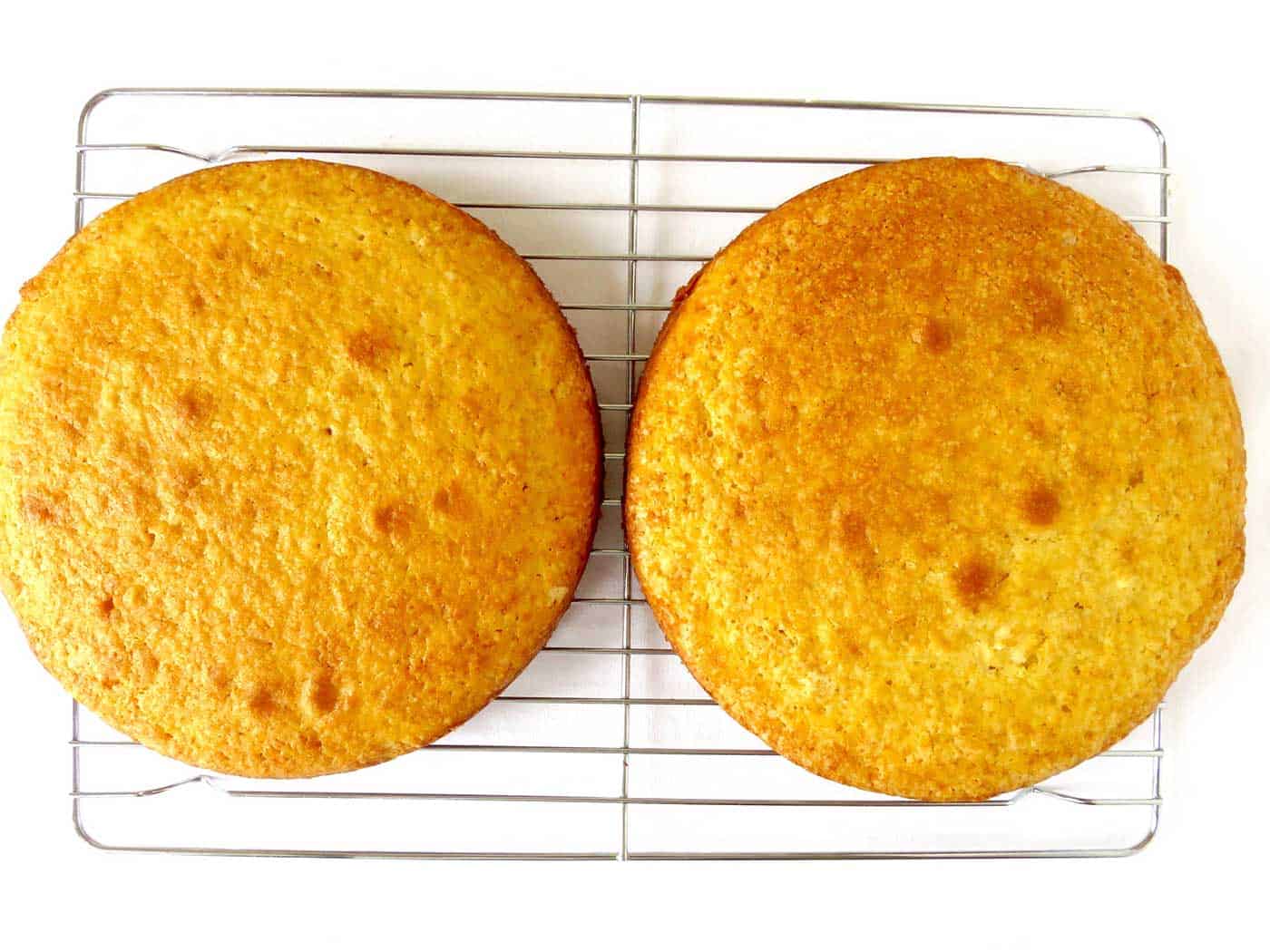
Does this scenario sound familiar to you?
Cakes are one of my favourite things to bake, however cutting into a cake in front of guests can be a little daunting if you don’t know if it is completely cooked through or not. You can always test a cookie, cupcake or muffin but you can’t always test a cake…or can you?
Usually baking times in a recipe are what has worked for the author of the recipe however, this baking time won’t always be the exact same for you because it is likely that you will be baking your cake in a different oven. And we all know ovens have different ‘personalities’. Thus, knowing a few secrets in how to tell when your cake is done can be very helpful so that you can avoid serving raw cake to guests. Here are a few baking secrets of mine I’ve learned along the way to help you:
How to know when your cake is done
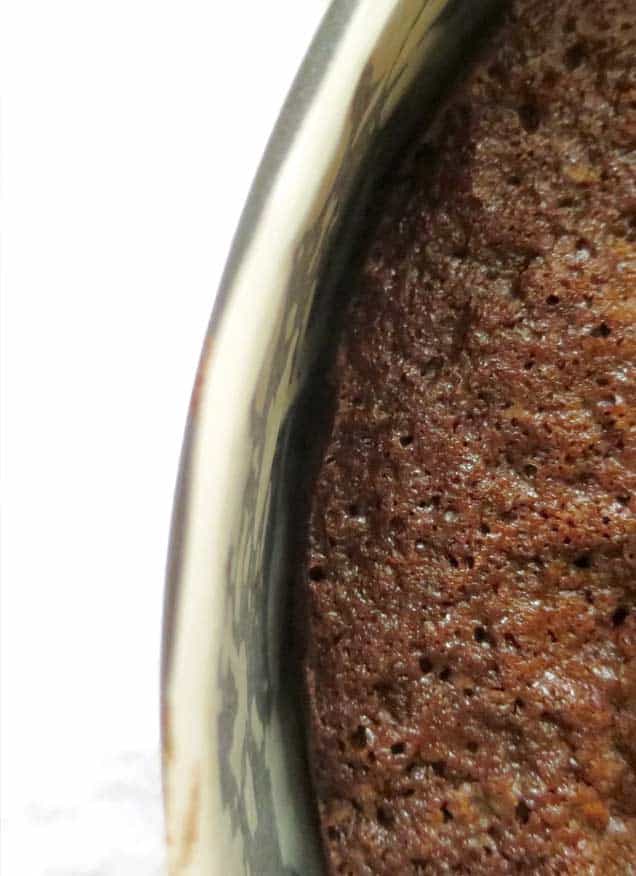
1. The edges pull away from the tin
Usually a cake has finished cooking when the edges of the cake pull away from the side of the tin. You should be able to see a gap between the cake and the tin.
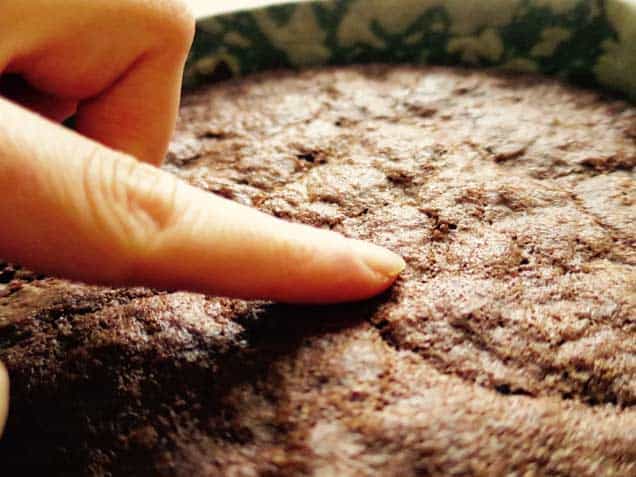
2. It’s springy to the touch
If your cake is bouncy/springy when you gently press down on it with your finger, it is likely that your cake is ready to be taken out of the oven. A wobbly or firm middle that doesn’t bounce back is a sign that the cake needs more baking time.
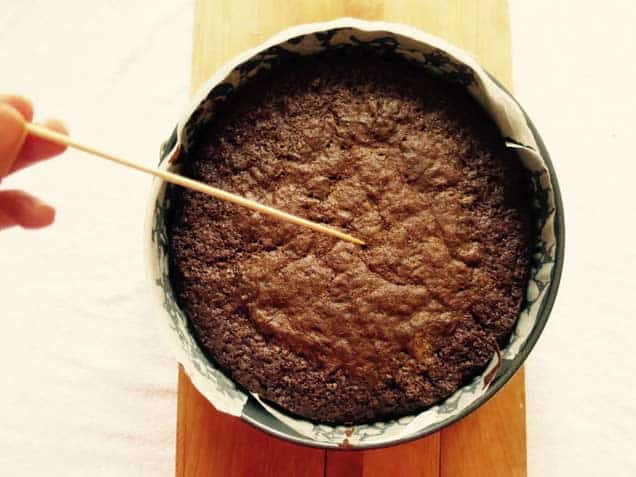
3. A skewer comes out clean
When you insert a thin skewer in the cake, it should come out clean (or with a few dry crumbs). If you pull it out and wet cake mixture has stuck to the skewer, it means the cake has not finished baking completely. If the cake is not fully baked, continue reading below to learn how to rectify this.
4. A thermometer reads 93–99°C
Perhaps the most accurate way to check if your cake is done is to use a thermometer to check the internal temperature of the cake, which should be about 93–99°C (200–210°F). Dense cakes like carrot cake or fruit cake are done at the higher end.
5. Cut a thin wedge to check
If in doubt/too eager/excited to see what the cake looks like on the inside, you can always cut a very thin wedge from the cake to have a peep – but don’t eat it just yet! Fit the wedge back into the cake and cover the cake completely with icing/frosting. No one will ever know! Do ensure the cake is completely cool BEFORE cutting the slice.
Alternatively, level the cooled cake with a bread knife, taking a thin layer from the top off (you can eat this part!) Check for texture, taste, and ensure the cake is cooked through.
How to save an undercooked cake
Can you put a cake back in the oven?
If the skewer or finger test shows the cake isn’t done, you CAN put it back in the oven, but only while it’s still warm. Give it 5–10 more minutes with a sheet of foil loosely over the top so it doesn’t over-brown, then test again. It may be a little drier around the edges, but it will be cooked right through. I’ve done this with success many times. If the cake has already cooled, use the tips below to save it instead.
If your cake has already cooled
If you have tested your cake once cool and it is not fully cooked, don’t panic! You can still save it.
Usually when a cake is undercooked the middle of it is the part that suffers the most but the outsides usually are fine. In this case, scoop out the undercooked cake in the middle and discard. Fill the gap with candy, fruit, frosting or chocolate ganache. Or you can make the hole bigger to make a ring cake. Check out this post for more ideas on how to save a sunken/undercooked cake.
FAQ
A little. The heat in the tin keeps firming the cake as it cools, which is why many recipes say to leave it in the tin for 10 minutes. But it won't cook a raw or wobbly middle, so if the centre is still wet, put it back in the oven while it's warm.
The middle looks darker, shiny or wobbly, sinks as it cools, and feels dense, gummy or wet when you cut it, often with a damp streak just under the top.
The skewer may have missed the wet patch, or gone through a piece of fruit or chocolate. Test in two or three spots near the very centre, and use the springy-touch test too.
Carrot cake is dense and moist, so it often needs longer than you'd expect. It's done when a skewer in the centre comes out with no wet batter (a few moist crumbs are fine), the top springs back, and the edges pull away from the tin.
It needs more time. Put it back in the oven for 5–10 minutes, covered loosely with foil if the top is already brown, then test again.
Foolproof cake recipes that are easy to bake
Lemon Layer Cake with Mascarpone Cream
Chocolate Cake with Peanut Butter Buttercream
The Best Lemon and Poppyseed Cake