Learn everything there is to know about baking cakes, cookies, breads and pastry dough using the rubbing-in method.

We’ve talked about the creaming method and the muffin method and now it’s time for another important mixing method – the rubbing-in method.
What is the Rubbing-in Method?
The rubbing-in method is the process of rubbing fat (butter, lard, margarine) into flour with your finger tips. Alternatively, the fat can also be ‘cut’ into the flour with two knives, a pastry cutter or even a food processor and can thus also be called the “cutting-in method”.
The rubbing-in method can be used to make cakes, scones, pastries, cookies and some breads.
The Rubbing-in Method has 4 Main Steps
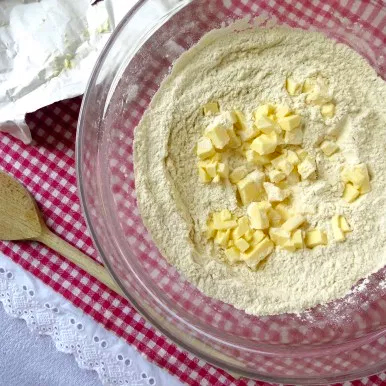
1. Add cold fat to flour and dry ingredients.

2. Rub (with finger tips) or cut the fat (using a pastry cutter) into the the dry ingredients until fine crumbs form.
3. Add liquid and/or rest of the ingredients. Mix gently until a soft dough forms.
4. Shape as needed and bake according to your recipe.
It’s as easy as that!
The Secrets of The Rubbing-in Method (pro tips!)
Although this method is super easy, there are a few tricks that are helpful to know when using it, so that you can produce the best baked goods as possible:
1. Use a freezing cold fat
When using the rubbing-in method to make scones and pastries the fat and liquid needs to be cold. If using butter, freeze it and then grate it into the flour before rubbing it in. Why? When cold butter is rubbed into the flour, it creates flaky pockets of flavour (which soft, room temperature butter can’t do). Once the cold butter and liquid (e.g milk) hits the oven, the water in the butter and cold liquid begins evaporating. This creates moisture, and also helps the dough to rise, creating tender and flaky layers (yuuuum).
2. Use your finger tips only
When rubbing the butter in to the flour/dry mixture, try not to use your whole hand to do so. The palm of your hand is warmer than your finger tips and will soften the butter. If it’s a really hot day, you might be better off getting out the food processor to do the job for you.
3. Aerate the mixture
Try keep your finger tips above the mixture when rubbing the butter in to create more air.
Why is the Rubbing-In Method used?
If you made three cakes with the same ingredients, but used different mixing methods to make it, you would get three different textured cakes.
Unlike the creaming method and the muffin method, the rubbing-in method coats the flour proteins in a layer of fat. This means that it is harder for water to get through, resulting in less gluten – which means a finer and more delicate texture.
Think of the butter as a waterproof coat around some of the flour particles. Because less water reaches the flour, less gluten develops, resulting in a softer, more tender bake.
What recipes use the rubbing-in method?
The rubbing-in method is commonly used for:
- Scones
- Pastry
- Crumble toppings
- Shortbread
- Some biscuit and cookie recipes
Any recipe that benefits from a tender, crumbly, or flaky texture will most likely use the rubbing-in method.
I particularly like using the rubbing-method for a flaky pie crust or shortbread base where not much air is needed as a leavener. For baked goods that need air, I normally use the creaming method.
Here's a simple run-down on the different mixing methods:
| Method: | Result: |
| Creaming Method | Light and airy |
| Rubbing in Method | Tender, crumbly, flaky |
| Muffin Method | Moist and slightly dense |
How Do I Know When I've Rubbed In Enough?
The mixture should look like fine breadcrumbs with no large lumps of butter remaining.
To test it, pick up a handful of the mixture and gently squeeze it together. It should hold its shape briefly before crumbling apart again.
For flaky pastries, some recipes intentionally leave a few pea-sized pieces of butter behind. These melt during baking and help create extra flaky layers.
Common mistakes when using the rubbing-in method
- Using warm butter
Warm butter melts into the flour instead of creating flaky pockets. - Over-rubbing the mixture
Rubbing too much can make the butter too fine and warm, reducing flakiness. - Over-mixing after adding liquid
Too much mixing develops gluten and creates a tougher texture. - Adding too much liquid
Sticky dough can become dense and heavy once baked.
FAQ's
Yes! A food processor is my favourite tool for this method, especially in warm weather. Pulse gently until the mixture resembles breadcrumbs. Be careful not to over-process.
Most recipes will tell you to rub the butter into the flour until it resembles:
- Fine breadcrumbs
- Coarse sand
- Oats or small peas (for flaky pastry)
The exact texture depends on the recipe (most recipes will tell you in the instructions how fine to rub the butter and flour.
Butter: best flavour and flakiness
Lard: extra flaky pastry
Shortening: very tender texture
Margarine: softer texture and easier to work with
Yes!
If your recipe uses butter, freezing it for 20–30 minutes and then grating it directly into the flour makes the rubbing-in process much easier. The butter distributes more evenly through the flour and stays colder, which helps create a lighter, flakier result.
Rubbing-In Method at a Glance
- Uses cold fat and flour
- Creates a tender, flaky texture
- Best for scones, pastry, crumbles and shortbread
- Fat is rubbed into flour before liquid is added
Ready to practise the rubbing-in method?
Start with one of these beginner-friendly recipes: